

 Views:80
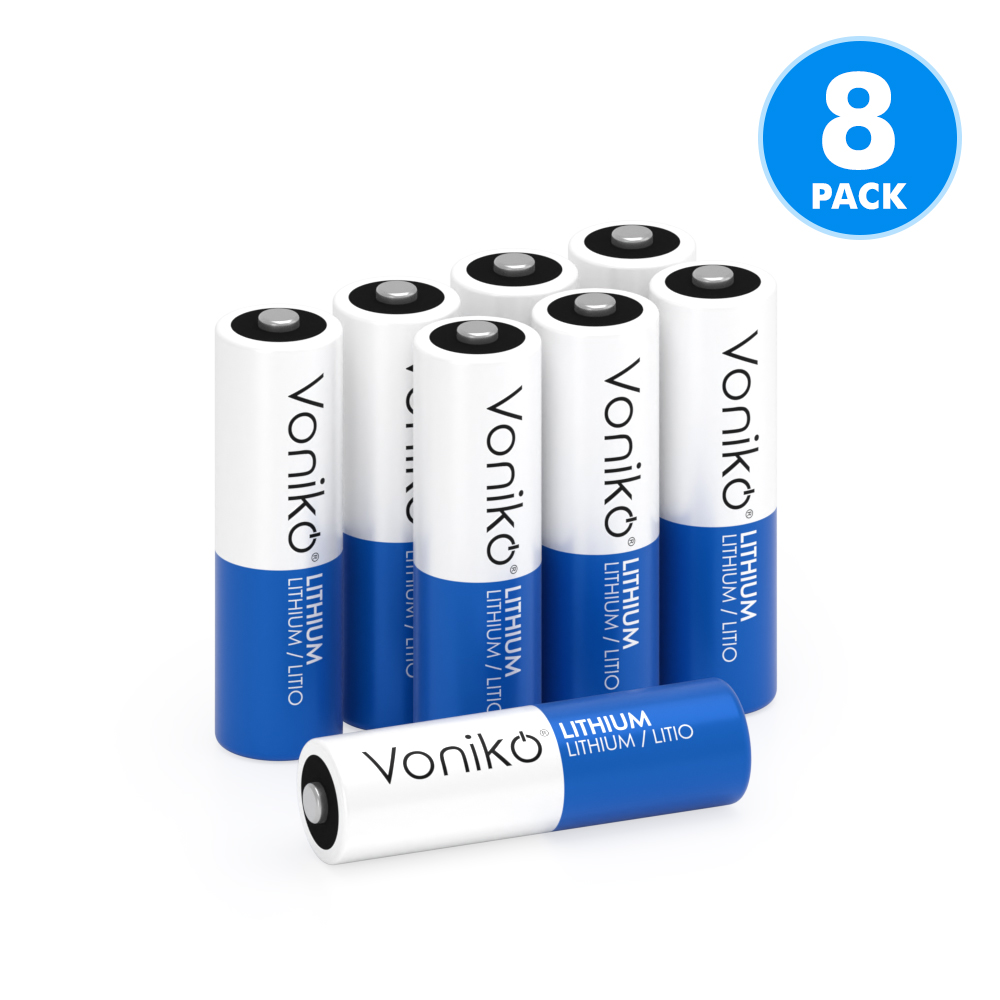
If your smart lock battery is draining fast, the first thing to check is battery chemistry, size, voltage behavior, and temperature exposure—not the lock body. A smart lock motor needs short bursts of power for locking, unlocking, keypad wake-up, and wireless check-ins, so the right battery has to handle pulse demand well. For locks that take AA cells, Voniko lithium batteries is built for high-drain devices, includes PTC protection, and is rated for wide operating temperatures.
Why smart lock batteries die sooner than expected
A smart lock usually drains batteries faster than a remote or wall clock because it does more than sit idle. Each lock or unlock event briefly spikes power use, and that pattern exposes weak battery choices quickly.
Motorized locking creates short, repeated high-current bursts
Wi-Fi, Bluetooth, or keypad wake cycles add standby drain
Exterior doors see more cold and heat than indoor devices
Mixed old and new cells cause uneven discharge
Wrong chemistry can trigger low-battery warnings early
What this means in daily use
If your lock is on a front door, garage entry, rental unit, or vacation property, temperature swings and standby time matter as much as raw capacity. A battery that looks fine on paper can still perform poorly if voltage drops too much during motor startup.
Which battery specs matter most for smart lock runtime
The best answer to "what lithium batteries for smart lock" starts with exact fit. Ignore broad marketing terms and check the specs that actually affect lock behavior.
Match AA or AAA exactly
Use only the battery size listed by your lock manufacturer. Voniko’s lithium line includes AA and AAA formats, but size is not interchangeable. If your lock is built for AA, choose AA; if it requires AAA, use AAA and do not force a substitute.
Focus on burst power, not just shelf-life claims
Smart locks need stable voltage during short heavy draws. Voniko lithium batteries are designed for high-drain devices and security sensors, which makes that positioning relevant for smart-lock use when the lock accepts the correct size.
Check temperature range for outdoor doors
Cold weather changes battery behavior fast. Voniko’s lithium battery category lists wide operating performance from about -40°C to +60°C, and the AA lithium listing specifically notes use in extreme temperatures from about -30°C to +60°C. That makes AA lithium batteries for smart home devices especially useful at entry points exposed to winter air, detached garages, and seasonal properties.
When Voniko AA lithium makes the most sense
If your lock uses AA cells and you are dealing with fast drain, winter inconsistency, or frequent battery swaps, Voniko AA lithium is the clearest match in this product line. It is the most relevant option for the common smart-lock format described in the brief.
Best-fit situations
Front doors in cold regions
Garage-access or side-entry smart locks
Short-term rentals that sit idle between guests
Backup battery sets stored for months before use
Homes where low-battery warnings show up too early in winter
Voniko PTC protection, short-circuit overcurrent protection, intelligent voltage surge safeguards, low self-degradation, and up to a 10-year shelf life for its lithium line. The same category also states about 90% power remains after 365 days in storage, which is useful when you keep sealed backup cells for emergencies.
AA lithium vs AAA lithium vs NiMH rechargeables
Battery choice gets simpler when you separate format from chemistry. Size tells you what physically fits; chemistry tells you how the battery behaves under load.
| Option | Best fit | Key advantage | Main caution |
|---|---|---|---|
| AA lithium | Smart locks that require AA | Better cold-weather and burst-demand support | Use only if the lock allows that chemistry |
| AAA lithium | Smaller compatible smart-home accessories | Lightweight lithium performance | Not the main answer unless the device requires AAA |
| AA/AAA NiMH rechargeable | Devices designed for rechargeables | Reusable up to 500 cycles | 1.2V nominal may confuse devices tuned for disposable cells |
Why rechargeables need extra caution
Voniko rechargeable AA and AAA batteries use nickel metal hydride chemistry and a 1.2V nominal voltage. That can work well in approved devices, but some smart locks are calibrated around disposable-cell voltage behavior and may show early low-battery alerts or reduced runtime with rechargeables.
Safety and storage checks that actually matter
Safe lithium batteries for smart locks are not just about brand claims. Safety depends on using the right format, keeping sets matched, and storing spares correctly.
Best practices
Replace all batteries in the lock at the same time
Keep spare cells sealed until needed
Store backup batteries in a dry indoor space
Inspect cells for dents, leaks, or torn wrapping before use
Remove depleted batteries promptly if the lock will sit unused
Mistakes that cause early failure
Mixing lithium and NiMH in one device
Mixing old and new cells
Replacing only one or two cells in a multi-battery set
Leaving spare batteries in a hot car or direct sun
Assuming all AA cells behave the same under load
OSHA notes that lithium batteries can present overheating and fire hazards if damaged, shorted, or misused, so clean installation and proper storage are part of battery selection, not separate from it. NIST also notes that internal resistance affects how current flows, which helps explain why pulse-demand devices expose weak battery performance quickly.
A quick selection path for smart home battery choice
If you want a fast answer, work through the decision in this order instead of guessing by package label.
What to check before buying
Confirm the exact battery size in the lock manual.
Verify whether the lock allows primary lithium cells.
Note whether the lock is indoors, outdoors, or in an unheated entry.
Decide whether you need long standby storage for backup sets.
Replace the full set together after purchase.
For most readers searching smart home battery selection, the practical answer is simple: if your smart lock takes AA batteries and supports lithium chemistry, Voniko AA lithium is the strongest fit in this lineup for cold-weather exposure, high-drain bursts, and long shelf storage.
FAQ
My smart lock needs new batteries too often, which lithium batteries should I buy?
Use the exact battery size your lock requires first, then confirm that the manufacturer allows lithium chemistry. For locks that take AA cells, Voniko AA lithium is the most direct fit in this product range because it is positioned for high-drain devices and wide temperature use. If the lock requires AAA, use AAA instead and do not substitute sizes. Rechargeable NiMH cells should only be used when the lock specifically supports 1.2V rechargeables.
Which lithium batteries are safest for expensive smart home devices?
The safest lithium batteries for expensive smart home devices are high-quality primary lithium cells with stable voltage, low leak risk, and built-in protections against short circuit and overheating. For devices that specify AA or AAA lithium batteries, choose a trusted option like Voniko lithium batteries, since consistent output helps protect sensitive smart locks, sensors, and other connected devices from shutdowns or erratic performance. Always match the exact battery type listed by the device maker and avoid mixing old and new cells or different chemistries. If a device uses a rechargeable lithium pack, look for models with a Battery Management System (BMS) for added safety.
What lithium batteries should I buy for a smart lock?
Buy the battery type your smart lock manual specifies first—most smart locks are designed for primary lithium cells, typically AA or AAA, rather than rechargeables. For reliable performance, prioritize high-quality lithium batteries with stable output, long shelf life, and leak-resistant construction, especially if your lock is used in cold or high-traffic conditions. Avoid substituting rechargeable NiMH batteries unless the lock manufacturer explicitly says they are compatible.
Why does my smart lock still drain batteries quickly after replacement?
Fast drain after replacement usually points to the wrong chemistry, mixed cells, temperature stress, or heavy wireless use. Replacing only part of the set is another common cause because one weaker battery drags down the others under load. Check that all cells are new, identical, and installed together, then confirm the lock’s app settings are not forcing frequent Wi-Fi activity. If the door is outdoors, battery temperature tolerance should move higher on your checklist.
What makes a lithium battery safer for smart home devices?
A safer battery for smart home devices uses the correct size, approved chemistry, and built-in protection features. Voniko lists PTC protection, short-circuit overcurrent protection, and intelligent voltage surge safeguards on its lithium line, which are relevant features for electronics that use control boards and wireless modules. Safe use still depends on installing a full matched set and avoiding damaged or loose cells. Never mix chemistries in the same lock.