

 Views:74
Your camera keeps going offline in the cold
If your outdoor camera stops working in freezing weather, Lithium Vs Alkaline For Outdoor Cameras comes down to four things: cold-temperature performance, voltage stability, storage life, and leak protection. For true winter use, Voniko Lithium Battery is the better fit because it is built for high-drain devices, supports wide operating temperatures, and is listed for cameras and security sensors. By contrast, Voniko Alkaline Battery makes more sense for lighter-duty devices and milder conditions. Cold weather reduces battery efficiency, and some device makers specifically recommend lithium cells for outdoor sensors in low temperatures.
A winter camera failure usually starts small. First, motion clips stop recording. Then night events drain the pack faster. Finally, the camera drops offline even though the same batteries seemed fine indoors. That is why Cold Weather Camera Batteries should be judged by real outdoor behavior, not only by whether the battery physically fits the tray.
Why Voniko lithium makes more sense for winter cameras
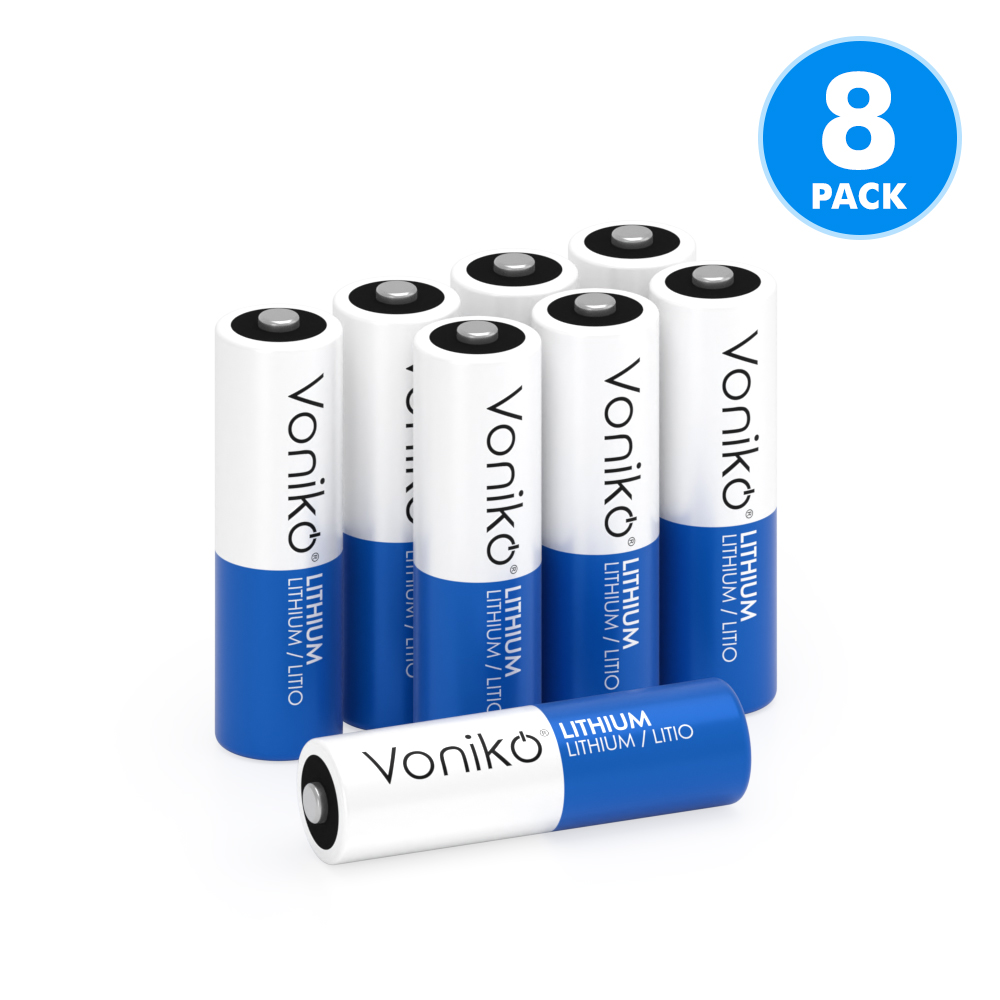
Voniko lithium line for high-drain devices and lists use cases such as digital cameras, security sensors, and safety equipment. The lithium page also highlights wide operating temperatures down to -40°C and up to +60°C, plus PTC protection and a 10-year shelf life. For a Winter Outdoor Camera Battery Choice, those are the specs that matter when the camera sits outside overnight and wakes repeatedly for motion events.
Voniko Lithium Battery at a glance
What it is: primary lithium battery line
Best for: outdoor cameras in winter
Sizes listed: AA, AAA, CR123A, and CR-V9
Key strengths: high-drain support, wide temperature range, 10-year shelf life, PTC protection
Limitation: more battery performance than many basic indoor devices need
Verified product fit
The official lithium page lists both AA and AAA formats, which matters because many outdoor cameras and accessories still rely on those common sizes. It also directly names digital cameras and security sensors as suitable uses. The AA lithium listing separately highlights extreme-temperature performance, which supports the case for exposed driveway, gate, and yard installations.
Detailed information: Voniko Lithium Battery
When Voniko alkaline is still a practical choice
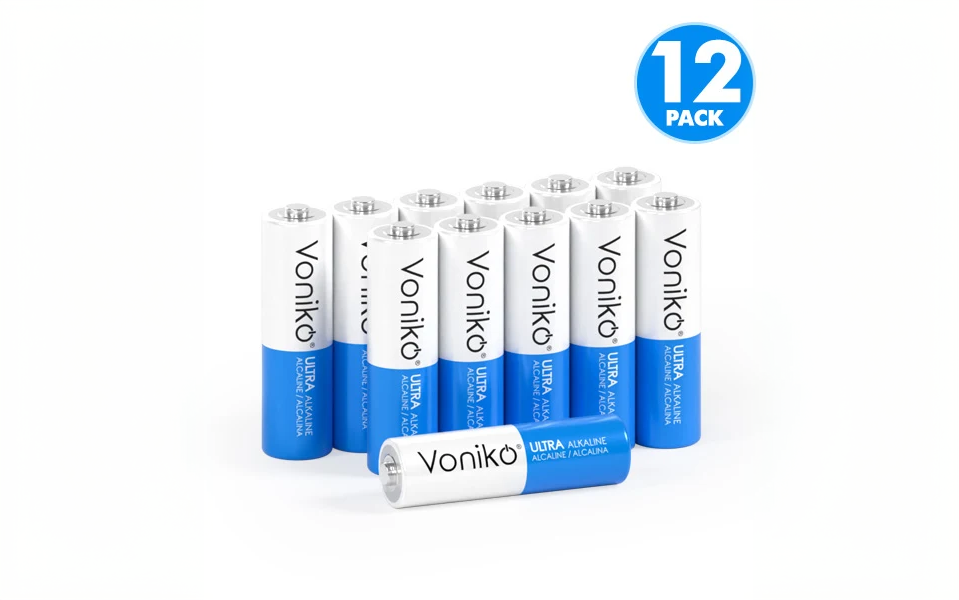
Alkaline is not the wrong choice for every camera. It is simply the more limited one once real winter sets in. Voniko’s alkaline line covers a broader range of everyday sizes, including AA and AAA, and the category is positioned for replaceable household electronics such as door locks, smoke detectors, gamepads, bicycle lights, and digital cameras. That makes it a workable AA Battery For Outdoor Devices when temperatures stay moderate.
Voniko Alkaline Battery at a glance
What it is: general-use alkaline battery line
Best for: moderate-temperature everyday devices
Sizes listed: AA, AAA, C, D, 9V, 23A, LR41, and LR44
Key strengths: broad size selection, anti-leakage design, shelf life up to 10 years
Limitation: published operating range is narrower at -10°C to 50°C
Where it fits best
Voniko alkaline fits better indoors, in backup drawers, and in devices that do not face frequent heavy drain spikes. A covered porch camera in a mild climate can still run acceptably on alkaline, especially if winter lows rarely stay below freezing for long. However, once you expect overnight freezes, longer replacement intervals, or frequent motion triggers, alkaline becomes the less forgiving option.
Detailed information: Voniko Alkaline Battery
Head-to-head: what changes once winter hits?
Here is the practical comparison for Lithium Vs Alkaline For Outdoor Cameras when both fit the same device.
| Dimension | Voniko Lithium Battery | Voniko Alkaline Battery |
|---|---|---|
| Best use | Winter outdoor cameras | Everyday moderate use |
| Cold range | -40°C to 60°C | -10°C to 50°C |
| Drain profile | High-drain devices | Standard-use electronics |
| Camera fit | Cameras, sensors listed | Cameras in milder use |
| Shelf life | 10 years | Up to 10 years |
| Safety feature | PTC protection | Anti-leakage design |
| Common sizes | AA, AAA, CR123A, CR-V9 | AA, AAA, C, D, 9V, more |
| Limitations | Higher-spec than basic needs | Narrower cold-weather range |
Which chemistry handles cold better?
Voniko Lithium Battery: The lithium line is published with a wide operating window from -40°C to +60°C. That alone makes it the better fit for below-freezing camera duty, detached garages, and open yard placements.
Voniko Alkaline Battery: The alkaline line is published for -10°C to 50°C. That can be enough for cool weather, but it leaves less margin once a camera faces repeated overnight freezes.
Best Fit: Lithium is the stronger winter choice because its published low-end temperature range is much wider. Battery performance also drops in cold conditions generally, and field guidance for outdoor sensors often favors lithium in low temperatures. According to NIST, higher internal resistance can limit current flow in lithium battery systems over time, which helps explain why power delivery behavior matters so much in demanding conditions.
Voltage stability under load
Voniko Lithium Battery: The lithium page says the batteries are ideal for high-drain devices and small cameras. That matters because motion-heavy cameras create repeated power spikes for wake-up, Wi-Fi transmission, and night vision.
Voniko Alkaline Battery: The alkaline line is described more as a general-use solution for replaceable electronic devices. It is a sensible fit for moderate drain, but it is not framed as the stronger option for frequent burst activity.
Best Fit: For motion-heavy setups, lithium fits better. If you are searching for the Best AA Lithium Batteries For Outdoor Security Cameras, the deciding factor is not just AA size but whether the battery can hold output more consistently during cold, repeated loads.
What about shelf life and device protection?
Both lines advertise long storage life. Voniko lithium lists a 10-year shelf life and 90% power after 365 days in storage, while the alkaline line lists shelf life up to 10 years. On protection, lithium adds PTC short-circuit and overcurrent safeguards, while alkaline highlights an anti-leakage design that protects devices for up to 365 days. OSHA notes that lithium battery safety depends on battery chemistry and design, so matching the right battery type to the device remains important.
Best fit by outdoor camera scenario
The right answer changes with placement, climate, and how often the camera wakes up.
Below-freezing driveway or yard cameras
Lithium is the better fit here. An exposed camera at the end of a driveway or on a fence line needs more cold tolerance and steadier output during overnight alerts. That is the clearest case for Best AA Lithium Batteries For Outdoor Security Cameras if the battery tray calls for AA cells.
Covered porch cameras in mild winters
Alkaline can still be practical when the camera is sheltered and temperatures only dip modestly. The tradeoff is shorter comfort margin during sudden cold snaps, so you should expect earlier replacement and more watchful maintenance.
Motion-heavy security setups
Lithium fits better for frequent recording events, push alerts, and night activity. A battery listed for high-drain devices is simply closer to what these cameras do in the real world than a general-use household battery.
Final recommendation
If your outdoor camera is stopping in winter, the fast buying answer is simple: choose lithium for true cold-weather use and choose alkaline for lighter-duty or milder conditions. Within this internal comparison, Voniko Lithium Battery is the best fit for exposed winter cameras because it is listed for cameras and security sensors, supports high-drain devices, and carries the wider operating range. Voniko Alkaline Battery remains a sensible backup for everyday electronics and cameras used outside freezing conditions. Before you buy, confirm whether your camera takes AA or AAA cells and whether the manual allows primary lithium chemistry. For disposal and replacement planning, the EPA advises handling used batteries by chemistry and local recycling rules.
FAQ
My camera dies quickly in the cold, what lithium battery should I buy?
For a camera that loses power in winter, lithium is the better battery type. It handles low temperatures better and fits high-drain camera behavior more closely than a general-use alkaline cell. Check whether your camera uses AA or AAA batteries, then match that exact size and confirm the manual allows lithium primary batteries.
Best lithium batteries for a camera in winter?
Yes, AA lithium batteries are usually the better choice when the camera is outdoors in freezing or highly variable weather. They are a stronger fit for motion-triggered drain, overnight operation, and longer intervals between replacements. If the camera accepts AA lithium cells, Voniko Lithium Battery is the direct fit within this comparison.
My outdoor camera stops working in winter, which lithium batteries should I use?
For an outdoor camera that stops working in winter, use lithium batteries—specifically the lithium type recommended by your camera maker, which is often AA or CR123A primary lithium rather than rechargeable cells. Primary lithium batteries perform much better than alkaline in freezing temperatures, delivering more stable voltage and longer runtime during motion-triggered recording. Before purchasing, double-check the exact battery size and whether your camera supports rechargeable lithium batteries, since using the wrong type can cause poor performance or device issues.
What should I check before switching from alkaline to lithium?
Start with the camera manual and the battery tray label, because some devices limit which chemistry you can use. Then confirm the exact size, usually AA or AAA, and think about the real outdoor conditions around the camera. A driveway, gate, or yard camera needs more cold-weather margin than a sheltered porch unit.
Does shelf life matter if I only use the camera seasonally?
Yes, shelf life matters because seasonal cameras often sit unused before you need them again. A long storage life helps reduce self-drain and makes backup batteries more dependable when winter starts. It does not replace cold-weather performance, but it does improve readiness.
Is leak protection still important if winter performance is my main concern?
Yes, leak protection still matters because outdoor cameras are often harder to service and more expensive than the batteries inside them. A battery that resists leakage lowers the risk of contact damage during long installation periods. For winter use, you want both: better cold performance and solid device protection.